
For Chef Steve Sanggun Lee, preserving “authentic Korean flavor” is non-negotiable.
“When you connect the familiar flavors of Korean and Thai, it is easy for people to understand, even in fine dining,” he tells BK.
Hot off his tenure as head chef at Hansik Goo, where he earned the restaurant its first Michelin star in 2022 and received the Michelin Young Chef Award for Hong Kong and Macau, Chef Steve brought I-Sang to Bangkok last year. I-Sang joins spots like Juksunchae that are proving that Korean food deserves a bigger place on the city’s fine dining scene.
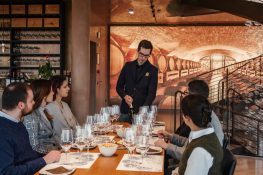
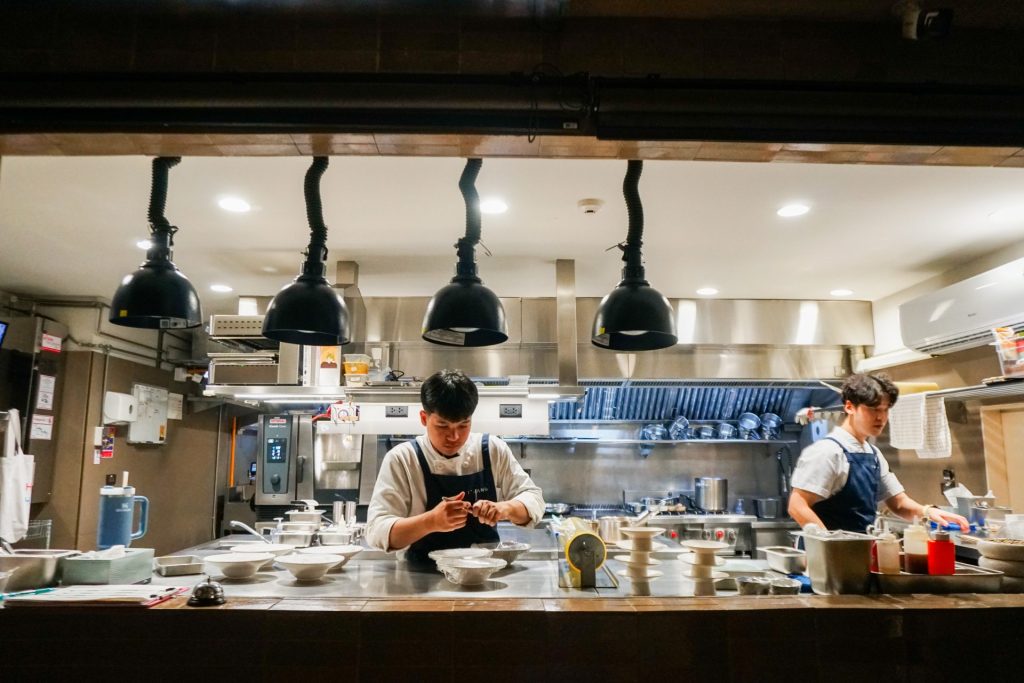
Chef Steve sets the tone, personable and engaging, serving dishes and chatting with guests. He believes that even fine dining can be approachable, emphasizing storytelling and connection. Inspired by his visits to local markets, Thai ingredients are key to the menu here, a blend of Korean fermentation techniques with Thailand's vibrant citrus and herbs. The result is a menu that feels both personal and locally inspired, shaped by Chef Steve's childhood memories.
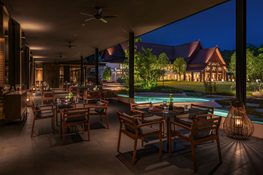
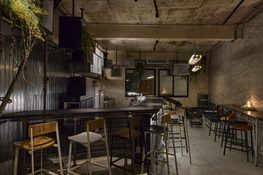
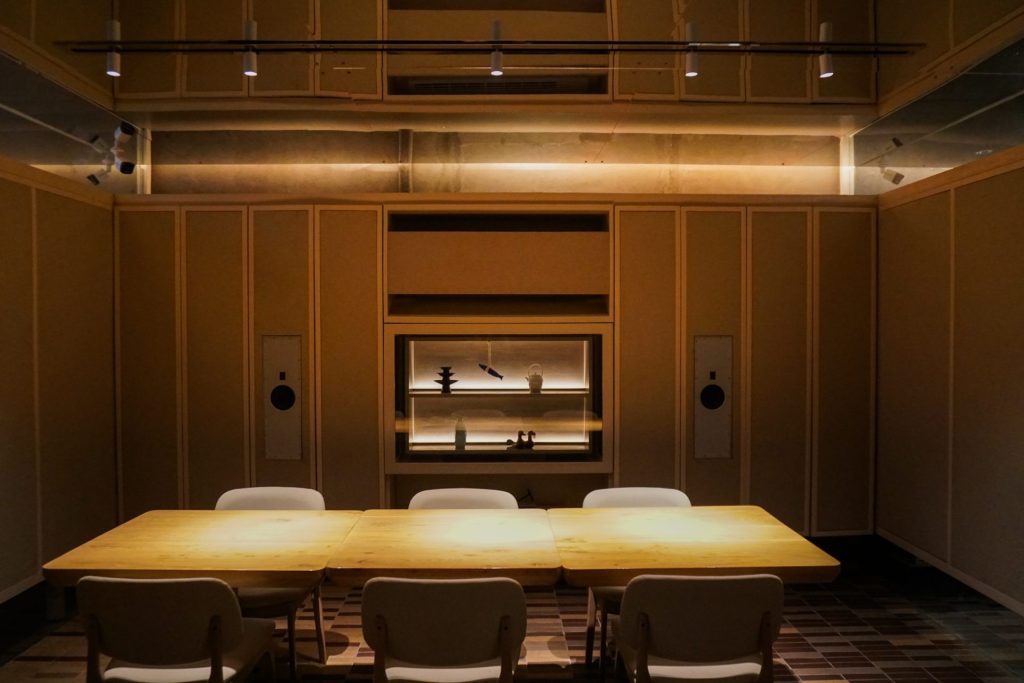
I-Sang strikes a balance between polished and relaxed, with large windows that let in natural light and offer a view of the city, but the upbeat music and a lively atmosphere keep the dining experience informal.
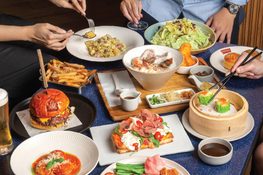
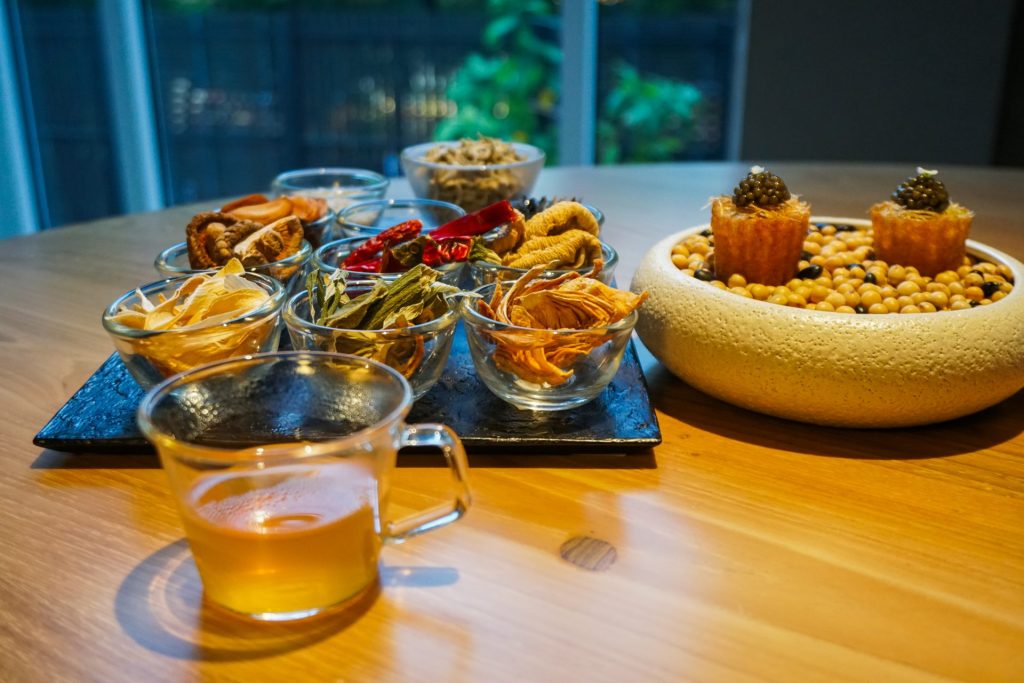
The meal begins with a series of refined amuse-bouche, starting with a warming anchovy broth that aids digestion, a tart with a savory shell, grated radish, and caviar. Next is a lightly blanched cuttlefish, cured and sat over rich Korean soy sauce, followed by an Australian beef tartare skewer with green mango and honey pear paired withJerusalem artichoke chips and smoked egg yolk puree. The final bite is a fluffy, makgeolli-infused steamed bun.
“When Korean people have a meal, we always go to soup first...It helps the body prepare for a big meal.”
The appetizer features a vibrant interplay of textures with baby octopus served on a base of apple and radish kimchi, made from house-made vegetable stock and original water kimchi. Chef Steve explains that he adds this to create “more umami and deeper flavor, which complements the other ingredients.” For your tipple, I-Sang serves signature Sonsoo Korean wines specifically tailored to complement each course. The baby octopus is paired with a basil-forward wine that highlights its herbal notes.
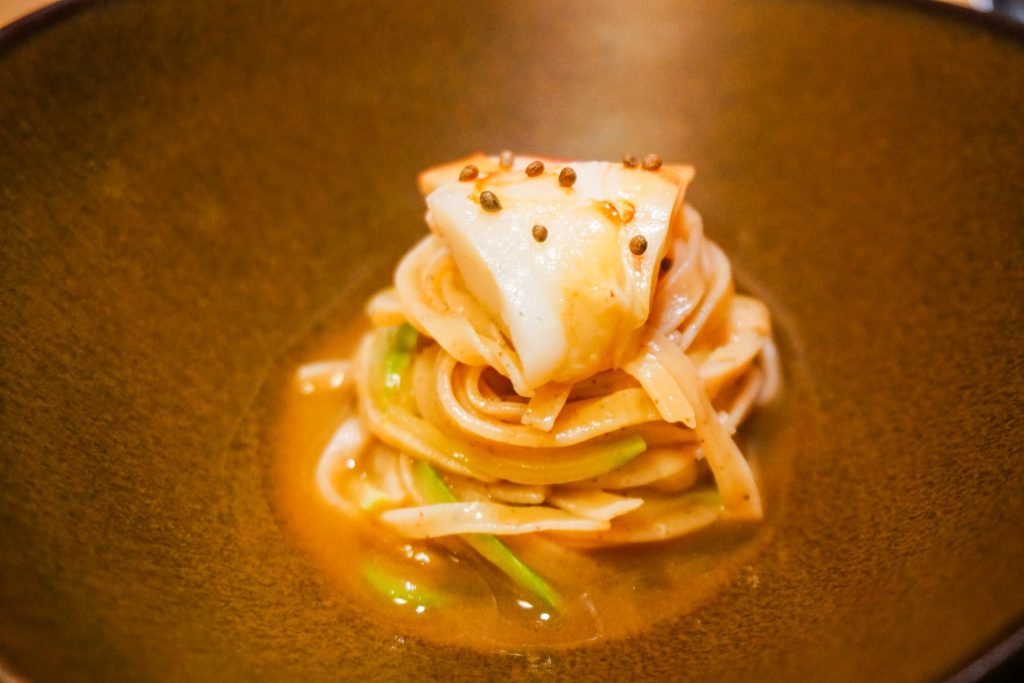
The signature course features hand-cut zucchini noodles tossed in aromatic perilla oil, a staple of Korean cuisine that provides a rich, nutty foundation–topped with local tiger king prawns and crunchy perilla seeds. This is paired with Omija, a magnolia berry wine known for its complexity.
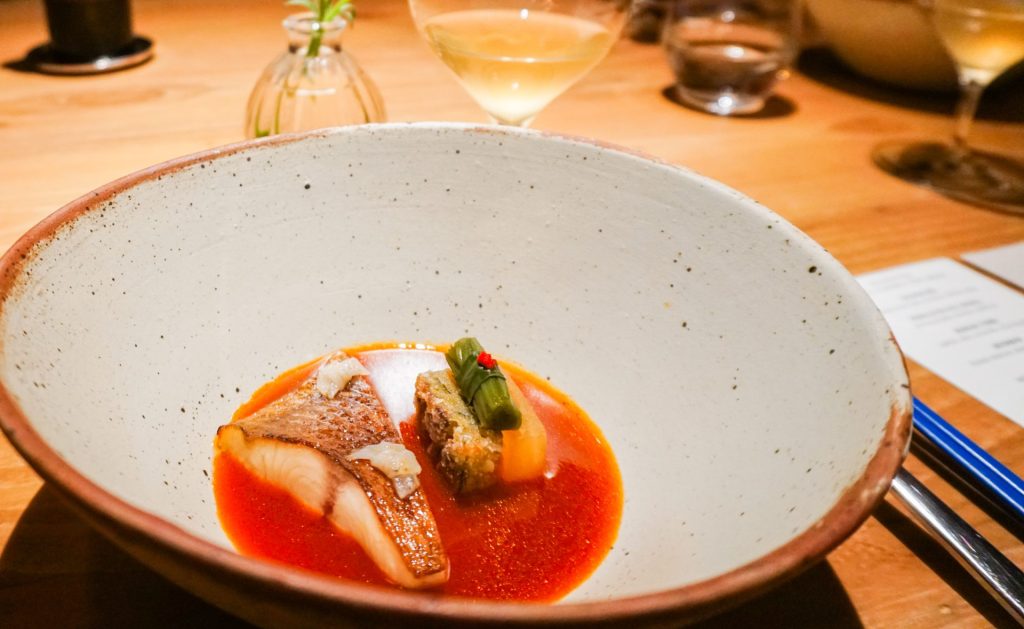
Next up, catfish, something Chef Steve touts as a highly underrated fish. Prepared in a savory gochujang garlic oil, it’s finished off with a blowtorch for a smoky, charred exterior. This rich and spicy fish dish is complemented by a bright mix of sujebi, morning glory, and coriander root jeon to contrast the fish’s depth.
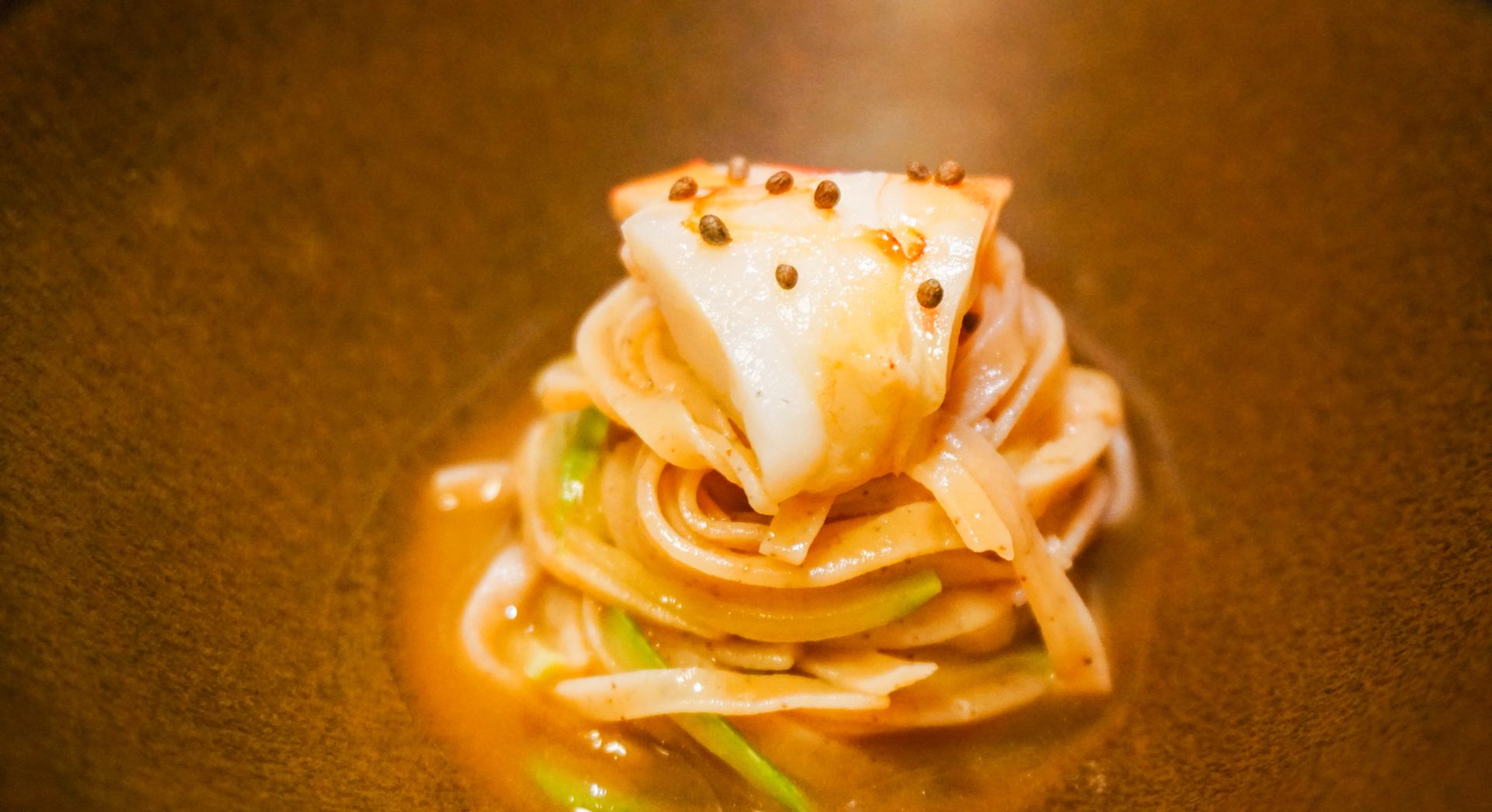
This is followed by premium abalone from Jeju Island. Chef Steve pairs the delicate shellfish with local asparagus, providing a slight, intentional crunch that serves as a structural counterpoint to the tender abalone. A classic version of makgeolli, light, airy, and sweet, is paired with this dish to complement the shellfish's delicate texture.
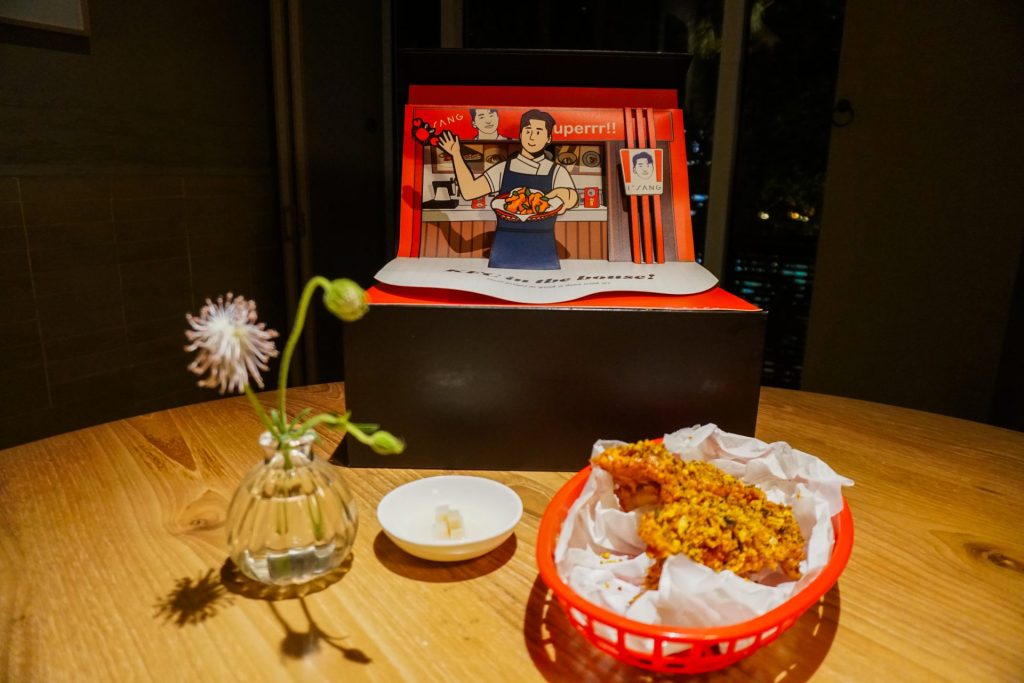
In a playful twist, Chef Steve presents a "KFC"–a themed pop-up box: Korean Fried Crab. The dish features local soft-shell crab tossed in a classic sweet-and-sour gochujang sauce. The dish uses a Hong Kong-style caramelization technique and is coated in a breadcrumb mixture of crab oil, shallots, peppercorns, and fresh basil for maximum crunch.
To balance the intensity, it is served with a side of ginger-pickled coconut for a bright, refreshing contrast to the savory heat.
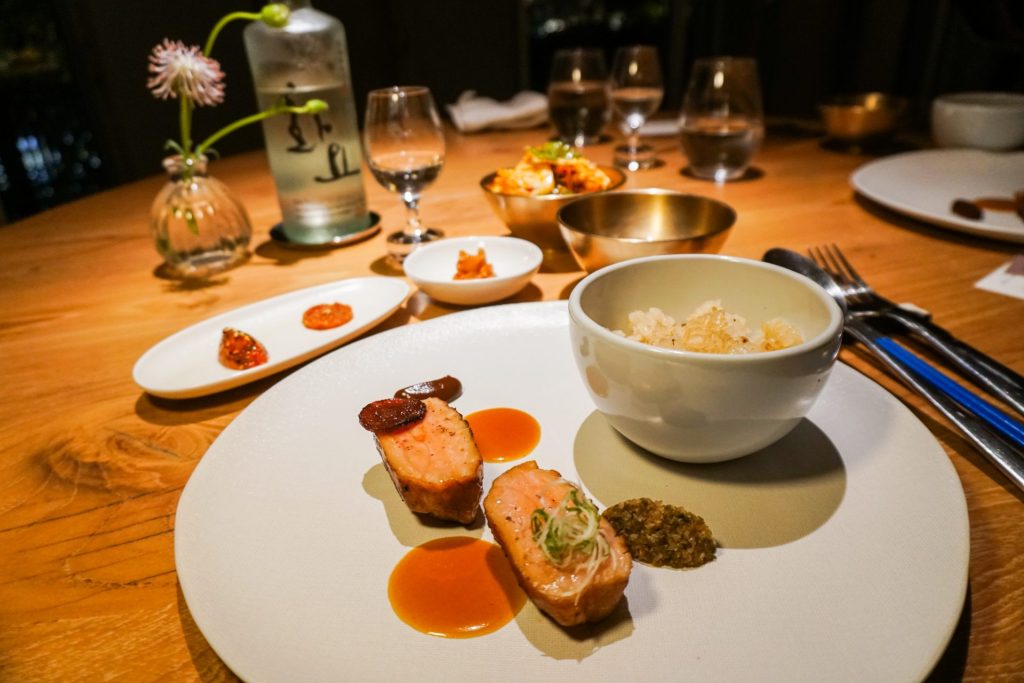
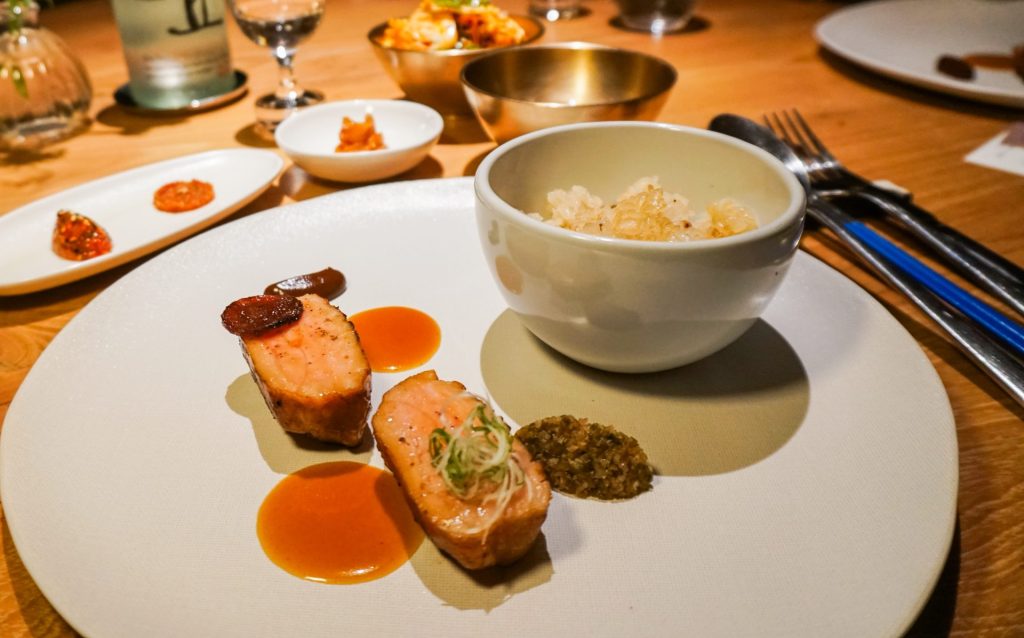
For the main course, it’s tender local pork marinated in soy sauce and blended vegetables. It’s served over a rich purée of black garlic from Chiang Mai, which adds a deep, caramelized sweetness. To balance the savoriness, the pork is accompanied by a trio of Myanmar-inspired pickles finely chopped to provide a bright, acidic finish, and the drink to go along with it is a premium soju.
As the meal progresses, the pairings transition to more traditional spirits that complement the richer courses. This carefully curated beverage program ensures that flavors, from the foundational anchovy broth to the final bite of gochujang caramel, is elevated by a distinctly Korean pour.
Dessert marks the transition of the seasons, featuring a smooth coconut ice cream atop a simple, buttery crumble for added texture. This is paired with a delicate jelly made from two varieties of strawberries and topped with vibrant slices of seasonal mayongchid.
The dining experience concludes with a final course of tea and small bites, including a chocolate bonbon that reveals a surprising liquid center. This is served alongside a gochujang caramel with a luxurious, melt-in-your-mouth texture and a subtle hint of warmth. It’s all finished off with a hot tea service.
Korean food of this caliber is just now finding a space on the Bangkok foodie scene. I-Sang does things its own way, measuring the casual with the complex, and we can’t wait to see what they’ll do next.