
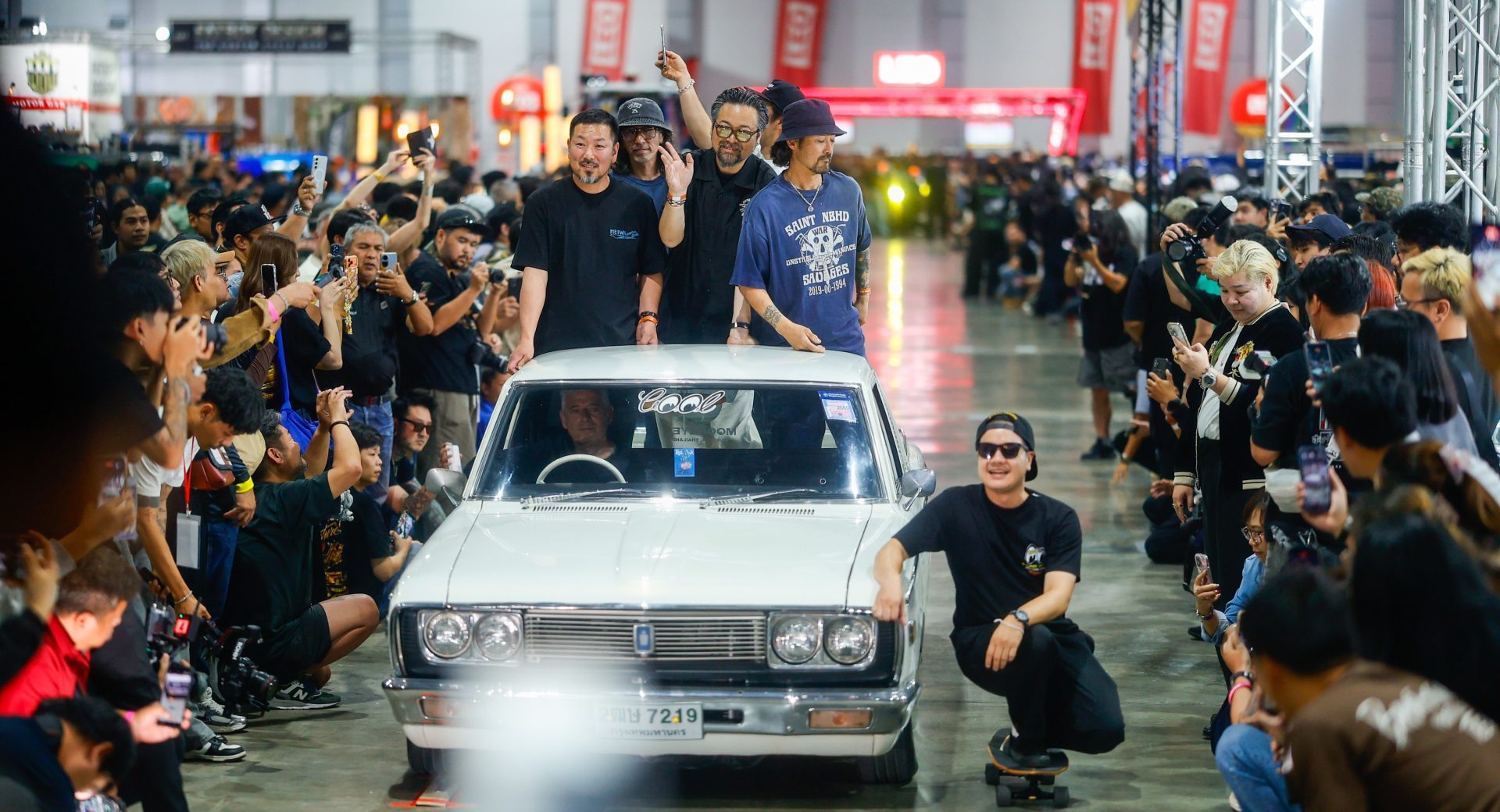
If you navigated the sprawling grid of Bangkok last weekend, all roads led to the same place: the sensory overload of the IMPACT Exhibition Center in Muang Thong Thani. The Bangkok Hot Rod Custom Show roared back for its sixth edition a full decade after its 2016 debut — filling Halls 11-12 with over 400 custom vehicles, 50 world-class judges and the kind of barely-contained energy that makes you feel like something genuinely historic is happening.
Because it is.
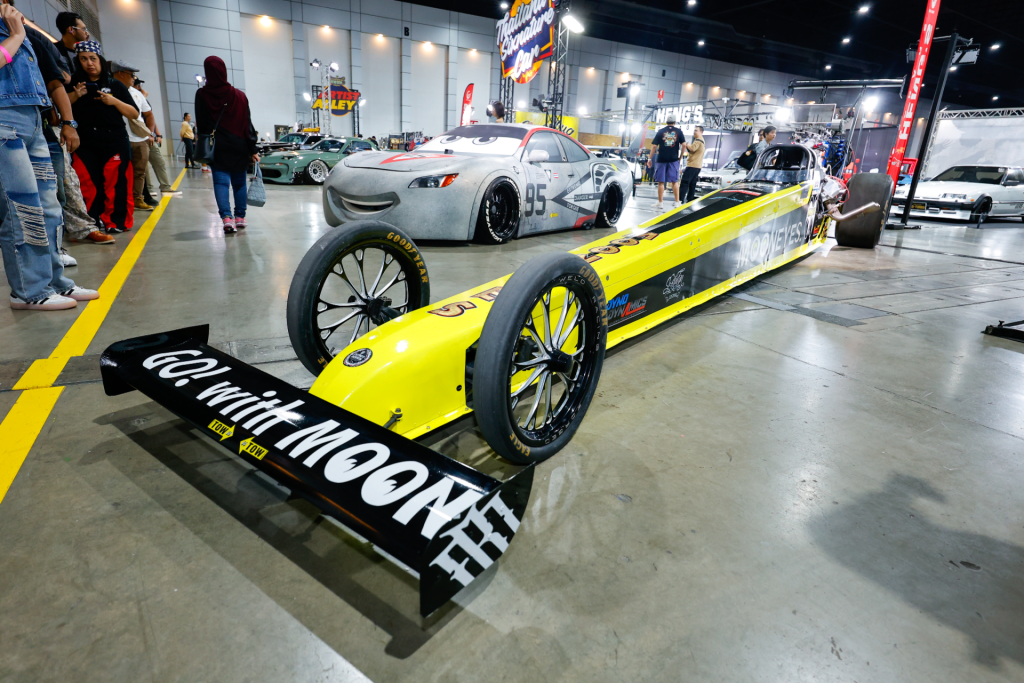
Walking the floor on the eve of the opening, the sheer variety of machinery is staggering. This is not a gathering for a single tribe of gearheads. It is a living, breathing art exhibition that somehow holds together an entire universe of automotive subcultures under one roof. The yellow Mooneyes dragster — impossibly long, built purely for speed — sits a few meters from a chrome-stacked, monstrous Ford 8210 tractor that has absolutely no business looking this good. A slammed tuk-tuk covered in tattoo-style airbrush graphics and an aggressive web of chrome chains catches the light nearby. A pristine 1956 GMC pickup in white and teal pinstriping gleams under the arena lights like it just rolled out of a fever dream set in 1950s California.
Then there is the 1958 Edsel convertible — white, immaculate — with a skeleton propped casually in the driver's seat and a Captain America shield bolted on as the spare tire cover. That particular build tells you everything you need to know about Bangkok’s custom builder scene: technically flawless, deeply referential and not above having a laugh.
From secret society to soft power
"I made a decision to start this because I traveled to many overseas events and then looked back at our custom culture," says Nanthapat "Bomb" Unpikul, the founder and driving force behind the show. "I realized Thailand had a custom culture society, but absolutely no space for them to show their bikes or cars. This became the first and only true custom show in Thailand."
That was 2016. What followed was not a straight-line ascent — it was a deliberate, strategic climb. After running consecutive editions in 2016 and 2017, Bomb made a counterintuitive call: slow down to speed up.
"I realized if we do it every single year, we will just see the same bikes and cars," he explains. "Skipping to every two years gives the builders the time they need to actually create."
The biennial rhythm — six editions across 10 years — has proved him right. Each installment arrives with a new cohort of builds that feel genuinely evolved, not recycled. And the cultural appetite that builds up between shows means that when the announcement drops, it goes viral instantly.
"Every time we announce the date, there's a boom on social media," Bomb says. "Everybody says, 'I'm going, I'm going — let's get building.'"
Defining the Thai signature
For years, critics dismissed local custom builds as imitations of the long-established scenes in America or Japan. A decade in, that argument is finished. Bangkok has forged a highly specific identity — a style dictated not by instruction manuals, but by physical reality.
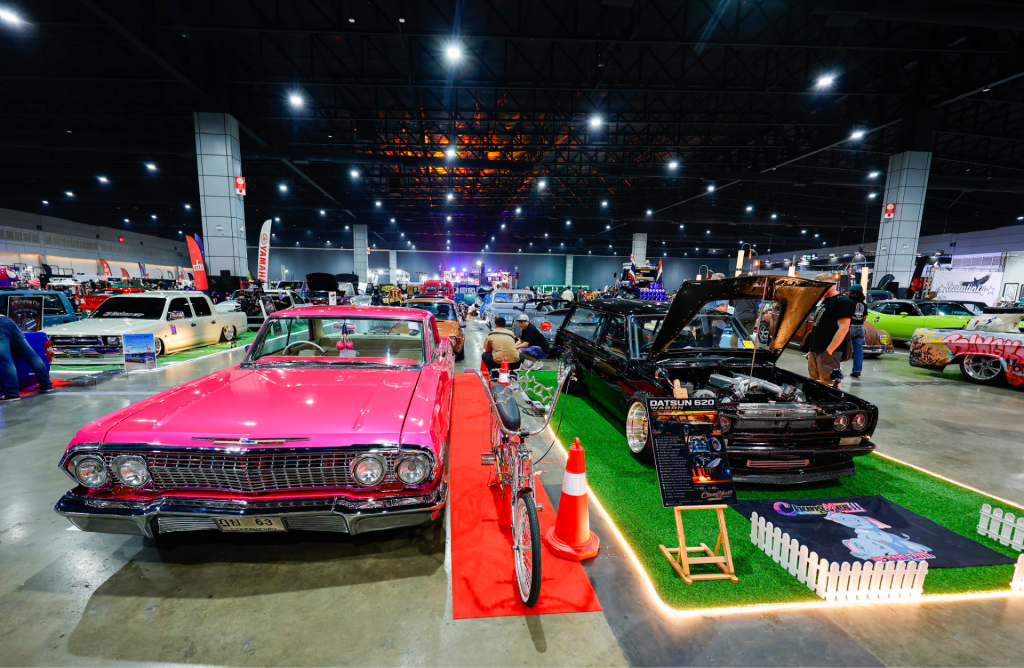
Walk past a radically chopped yellow 1940s Chevrolet coupe or a deep burgundy, gold-grilled custom sedan wearing the cursive declaration "I am not perfect, but I am a limited edition," and the local flair becomes unmistakable. It is American iron filtered through Japanese precision and refracted through a distinctly Thai irreverence.
"Thai style borrows from America and Japan, but it has its own character," Bomb explains. "When international judges come and see a build, they can tell right away: That's Thai style. They know immediately from the character."
When pressed on exactly what that character is, his answer is disarmingly candid — and kind of brilliant.
"We just build what we want to do. But when the bikes appear on stage or on the road, you notice they look thinner, sleeker. They are not too big, because Asian people are generally not as tall as Westerners. The bikes are tailored to our bodies and our streets. They match the Bangkok flow."
There is also a thread of resourcefulness woven into the Thai approach — the impulse to upcycle, to find the part in the dusty pile at Khlong Thom market and make it sing. It is not imitation. It is adaptation — and it produces something the world has not seen before.
50 legends, one weekend
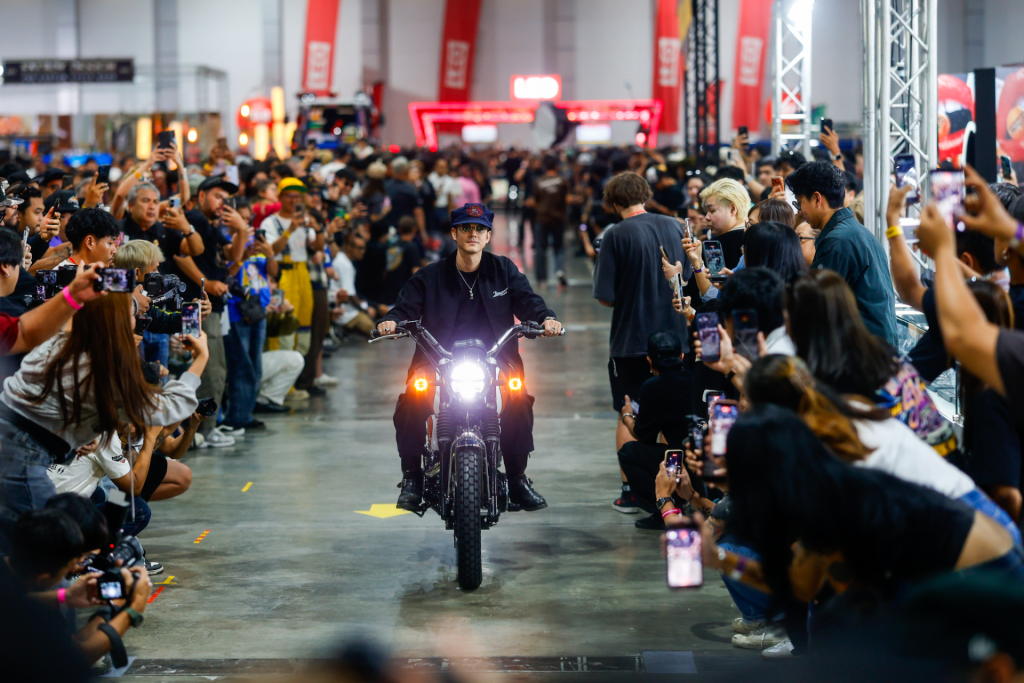
The clearest evidence that Bangkok is no longer seeking the world's approval came in the form of the judges' panel. This year's show assembled over 50 highly influential international judges who flew directly to Thailand, the largest contingent of international judges ever gathered in the ASEAN region.
The lineup reads like a who's-who of global custom royalty: Shige Suganuma of MOONEYES Japan; Yaniv Evan, the "FXR Godfather" from Hollywood; Gary Royal of Beware Choppers in San Francisco; Las Vegas builder Mike "Majikmike" Rabideau; and Giuseppe "Pepe" Lazzara, an Italian Chicano-style specialist whose work fuses European design with lowrider soul. They were joined by representatives from France, Australia, and a full ASEAN contingent.
"Our greatest strength this year lies in the confidence placed in us by the global community," Bomb says. "The presence of these legends, combined with over 400 custom vehicles, is irrefutable proof that Thai custom craftsmanship is second to none."
Bangkok as the workshop of Asia
Behind the spectacle is an economic story that deserves its own feature. The technical mastery of Bangkok's mechanics has accelerated dramatically over the past decade, transforming hobbyists working in backstreet soi garages into legitimate global suppliers.
The city's combination of low cost of living and obsessive craft precision has created something rare: world-class quality at workshop prices. A beautifully hand-stitched leather motorcycle seat from a local legend at the Train Night Market might run 8,000 baht. The same level of artisanal work — if it reaches an American collector — can command double that or more on the U.S. market, a premium that reflects not exchange rates but the perceived rarity of the craft.
"You simply cannot find this combination of low cost and elite quality anywhere else but Thailand," Bomb says. "The value is unbeatable."
This year, that reality caught the attention of an entirely new market. For the first time, the founder of Born and Bred — one of China's most influential custom culture movements — attended the show personally.
"I put them in the international zone because I just want them to meet everyone," Bomb says. "We can exchange ideas. Maybe there is something we can build together — Chinese and Thai, helping each other."
Bangkok Boy and the builds that define a scene
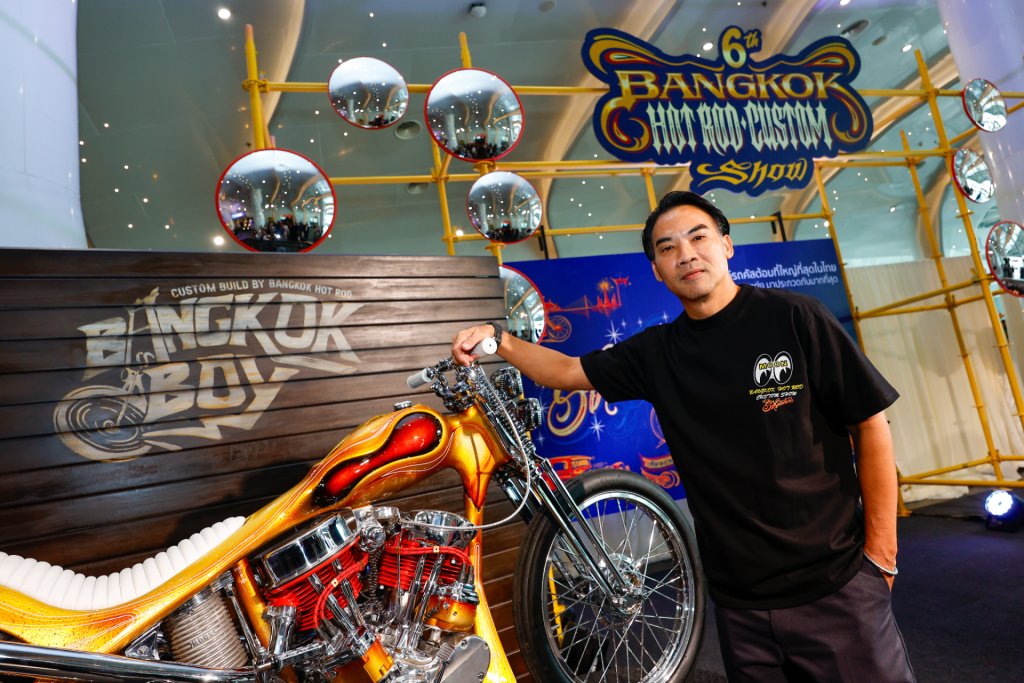
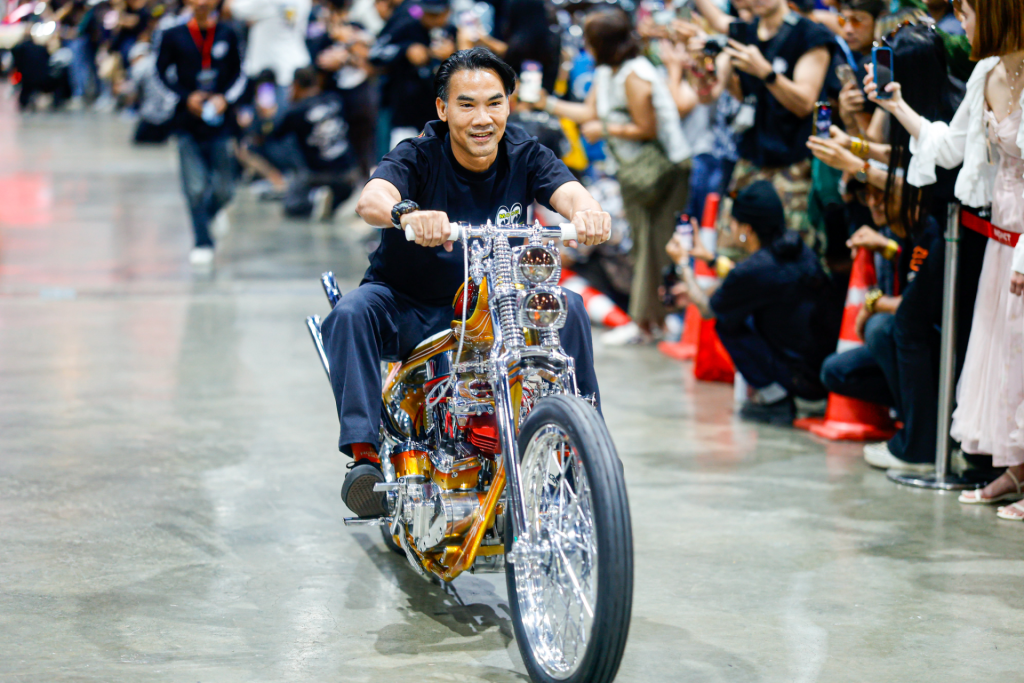
Nowhere was Thai craftsmanship more powerfully distilled than in Bangkok Boy, the custom motorcycle that serves as Thailand's ambassador to the international circuit. The machine recently swept four prestigious awards on the global stage, crafted from start to finish by a 100 percent Thai team. It returned to the show floor last weekend to a hero's welcome.
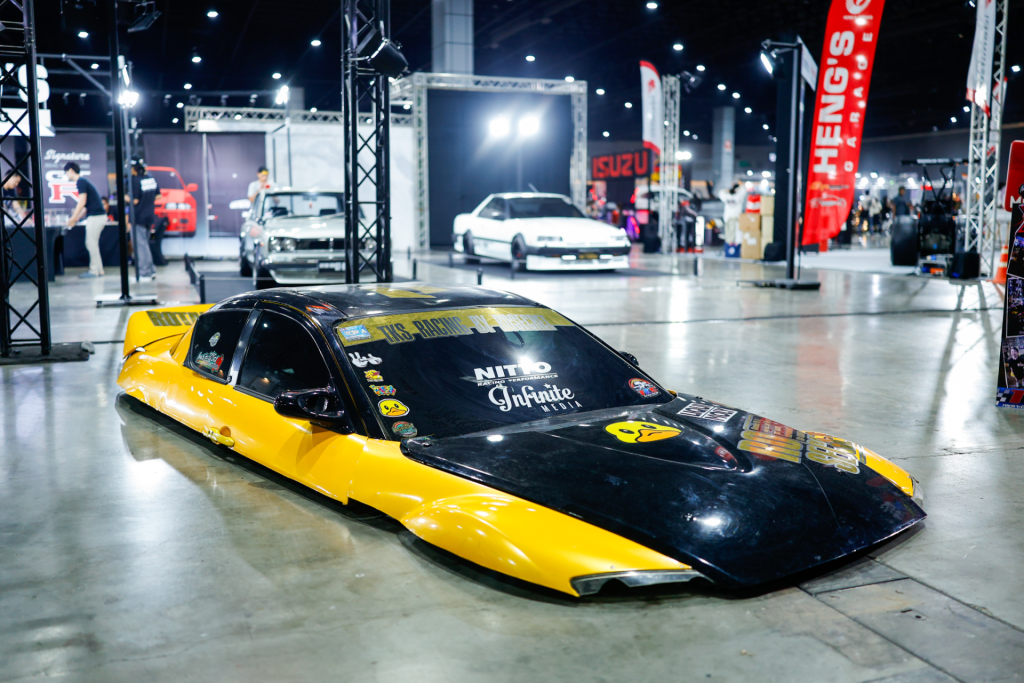
Elsewhere in the Thailand SiXnature Zones, the RX-8 by TKS Racing claimed the title of lowest-riding car on display, its slammed stance practically scraping the arena floor. Dogtor Garage — the self-styled cartoon car wizard — returned with the Tinky Winky concept, which does exactly what you hope. A collection of ultra-rare vintage engines including the Knucklehead, Panhead, Shovelhead and Flathead occupied their own reverential corner, each one custom-built to express the character of its owner.
For the motorsport faithful, the Group A zone gathered six legendary racing machines — icons from the circuits of the 1990s, now preserved and displayed as the cultural artifacts they have always been.
How to live the scene year-round
The show closes, but the community never stops. Bangkok is teeming with entry points for anyone who wants to go deeper.
Start at the Srinakarin Train Night Market, known locally as Talad Rot Fai. On weekends, its back alleys transform into an open-air gallery of custom choppers, vintage cars, and the workshops of master leather workers and pinstripe painters. This is where the scene breathes between shows.
Watch for the Bangkok Hot Rod Shop, an upcoming permanent space designed as a year-round community hub. The concept is a rotating gallery where builders can display and sell their work, and where local creators can drop off custom apparel and merchandise.
Seek out the local Mooneyes Thailand dealer network and affiliated lifestyle spaces across the city. These are the connective tissue between Bangkok's scene and the global hot rod brotherhood.
Look up K-Speed, the Thai custom workshop that has earned genuine international acclaim, and keep tabs on the growing community of young builders producing export-quality parts — seats, pipes, wheels — for collectors from California to Copenhagen.
The 5-year vision
Bomb's ambition extends well beyond the next edition of the show. Within five years, he wants Bangkok to function as the undisputed custom culture hub for all of Asia — a city where international enthusiasts arrive not just for a weekend event but to follow a dedicated trail of workshops, galleries and garage spaces.
"Singapore, Malaysia, Indonesia, Brunei — we are all friends and we all support each other," he says. "When we grow together, the whole region wins."
There is already organic momentum. A Western creator has been quietly mapping every custom car event in Thailand on social media, building a calendar that is gaining traction with international followers — proof that the appetite exists even before any official tourism infrastructure is in place.
As the gates closed on a record-breaking weekend, one thing was clear: Bangkok's custom scene is done looking outward for validation. From slammed blue Toyota sedans cambered over deep-dish white wheels to a vintage John Deere-themed custom truck parked improbably next to a cartoon-colored tractor, this city has developed a voice that is loud, specific and entirely its own.
It is built by hand, in the backstreets, by people who just wanted somewhere to show their vehicles.
Ten years later, the world flew in to watch.